
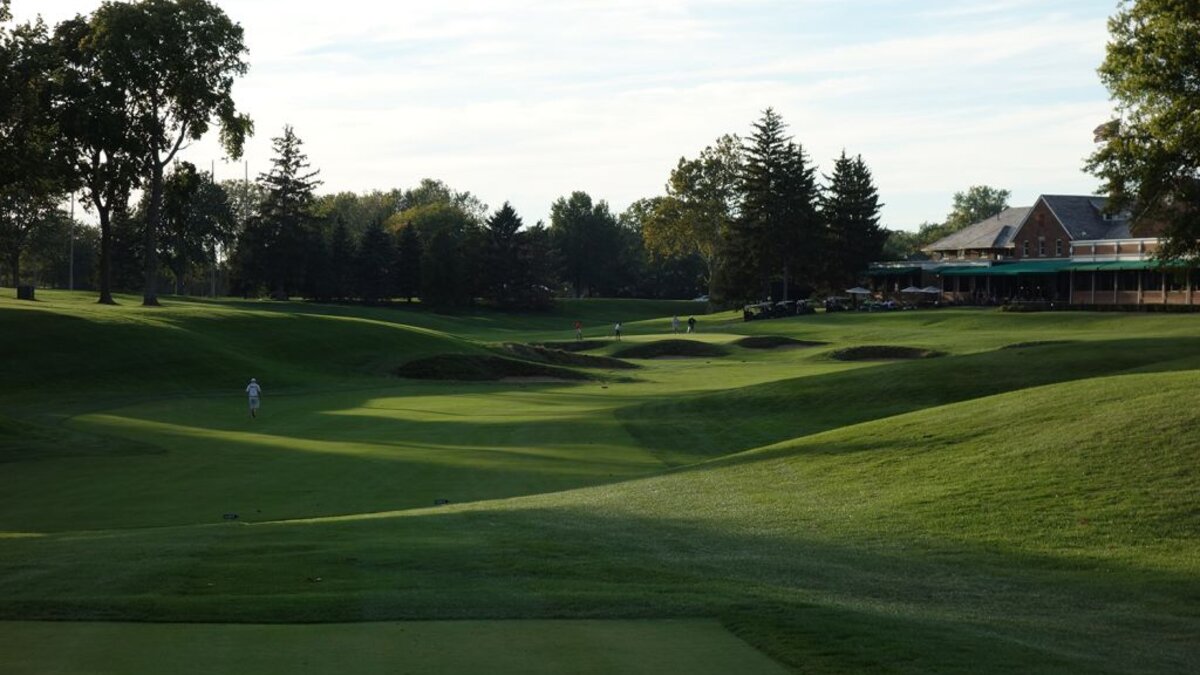
Ohio sits in the middle of an incredible stretch of American golf history.
Within a few hours of Toledo, golfers can find Donald Ross classics, Jack Nicklaus’ home turf, major-championship venues and courses that have hosted everything from the U.S. Open and PGA Championship to the Ryder Cup and LPGA Tour.
And some of the stories are every bit as memorable as Augusta, Pebble Beach or St Andrews.
Here are 10 famous golf holes from Ohio and the greater Midwest—and the moments that made them legendary.
1. Inverness Club No. 18 — Bob Tway’s Bunker Shot
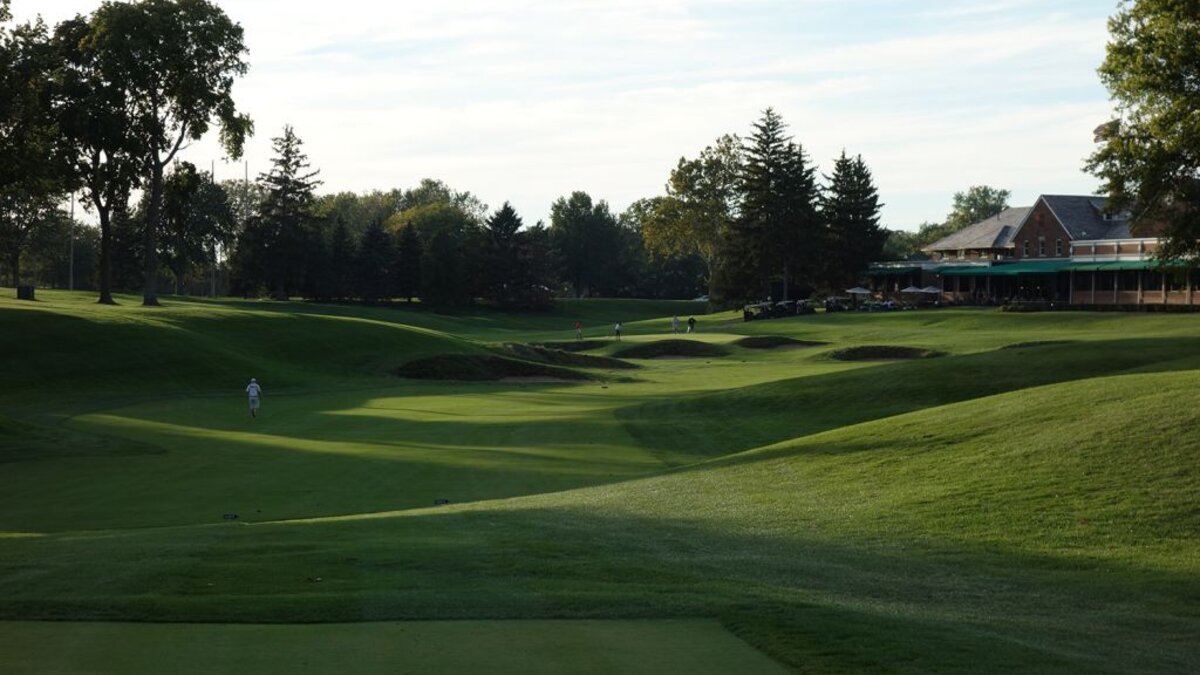
Photo: GolfCourseGurus.com.
Toledo, Ohio
We have to start close to home.
During the final round of the 1986 PGA Championship at Inverness Club, Bob Tway had erased Greg Norman’s four-shot lead when the pair reached the short par-4 18th.
Tway’s approach landed in the right-front greenside bunker. Norman was safely around the green.
Then Tway produced the shot that would define his career.
His bunker shot landed just onto the putting surface, rolled across the sloping green and disappeared into the cup for birdie. Tway jumped in the bunker celebrating while a stunned Norman watched another major championship slip away.
It was also historic: Tway became the first player in the modern era to win the PGA Championship with a birdie on the 72nd hole.
Why it matters: One of the most famous finishing shots in PGA Championship history happened right here in Toledo.
2. Highland Meadows No. 18 — Northwest Ohio’s LPGA Stage
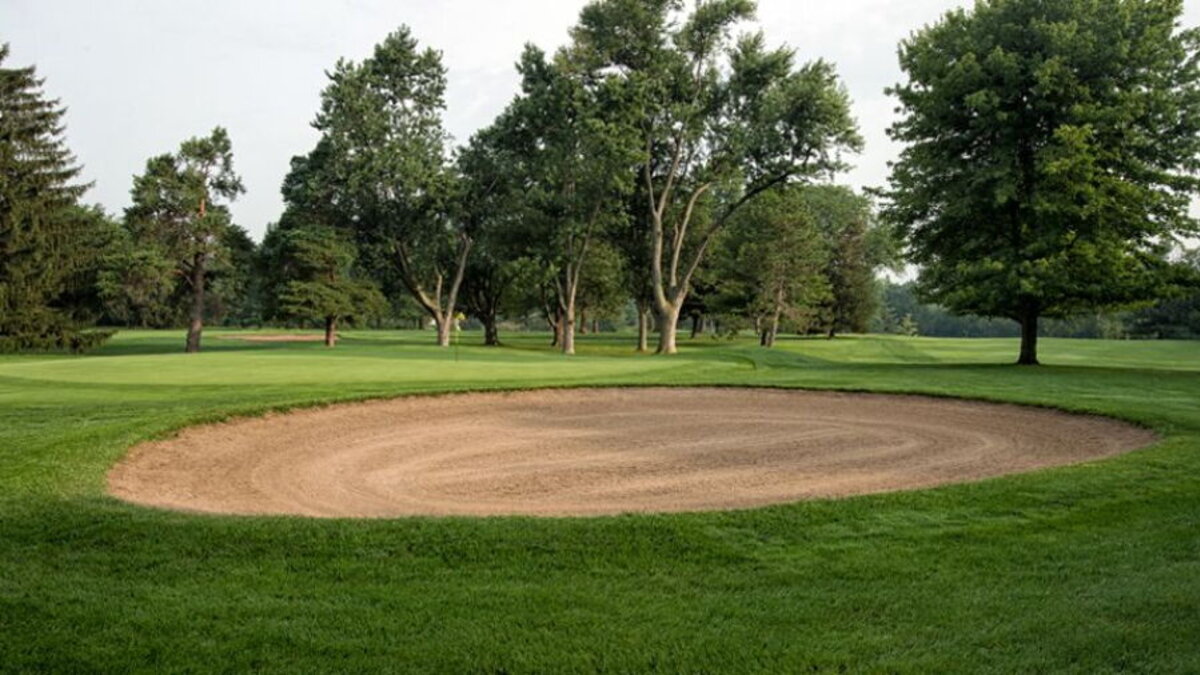
Photo: Highland Meadows Golf Club, via GolfPass. Course view (6th hole), not the 18th.
Sylvania, Ohio
Just across the Toledo area, Highland Meadows has quietly become one of the longest-running stops in women’s professional golf.
The tournament now known as the Dana Open began in 1984, and Highland Meadows has hosted it since 1988. The event celebrated its 40th anniversary in 2024 and has featured generations of LPGA stars.
The finishing hole is unusual for tournament golf: No. 18 is a par 5, giving players a legitimate chance to make something happen before they reach the clubhouse.
Over the years, that green has welcomed champions including Se Ri Pak, Paula Creamer, Lydia Ko, Nasa Hataoka, Linn Grant and others.
Why it matters: Northwest Ohio doesn’t just have golf history—it has an annual place on the professional-golf map.
3. Scioto Country Club No. 4 — A Shot Gene Sarazen Liked Better Than His Masters Albatross
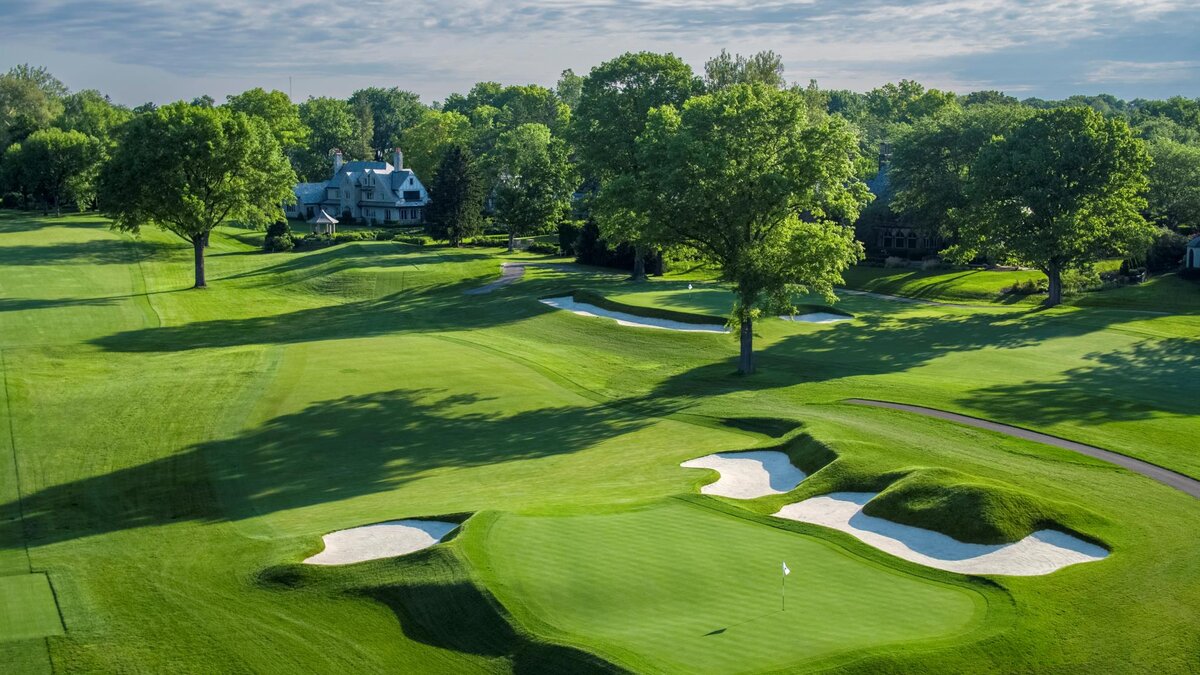
Photo: Scioto Country Club.
Columbus, Ohio
Scioto Country Club is best known as the place where Jack Nicklaus learned the game, but one of its best stories belongs to another legend.
During the 1931 Ryder Cup, Gene Sarazen missed the par-3 fourth green and found himself near an old stone shelter house.
His solution?
Sarazen chipped the ball through an opening in the structure and onto the green.
He didn’t save par—but still won the hole.
Scioto says Sarazen later considered that recovery shot better than his famous albatross at the 1935 Masters, one of the most celebrated shots in golf history.
Why it matters: Golf creativity isn’t new. Almost a century ago, one of the game’s legends was already inventing shots that sound impossible today.
4. Muirfield Village No. 16 — Tiger’s Impossible Chip
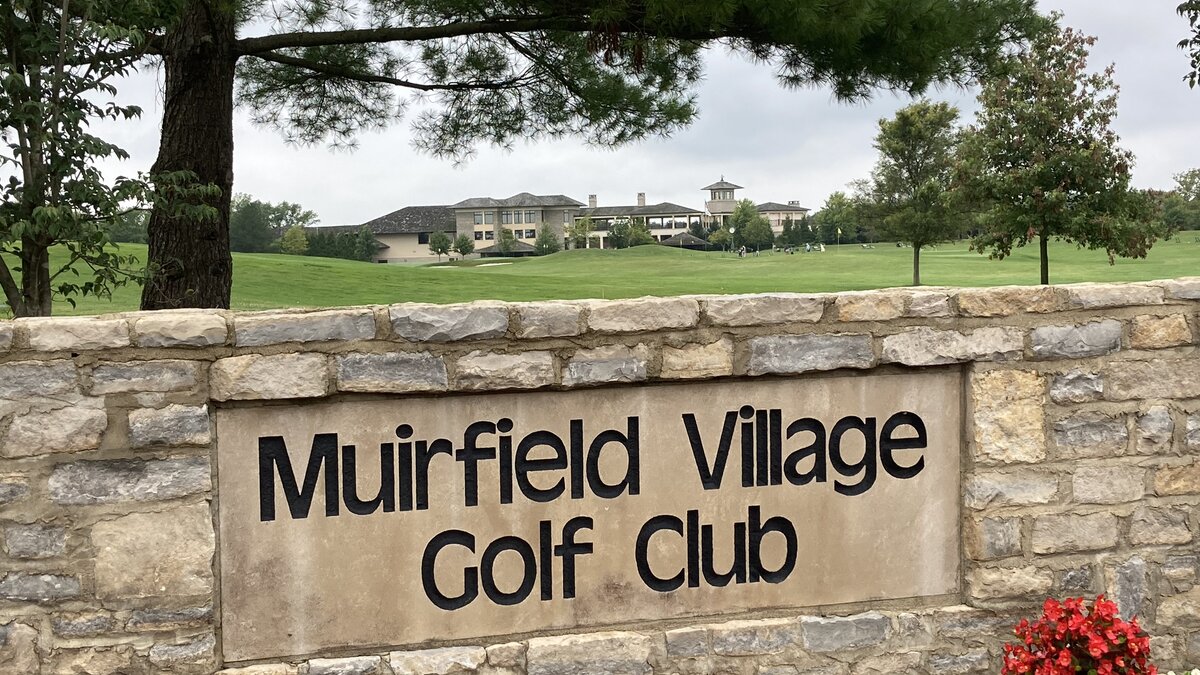
Photo: Nheyob, CC BY-SA 4.0, via Wikimedia Commons. Course view, not the exact hole.
Dublin, Ohio
If you have watched a Tiger Woods highlight reel, you’ve probably seen this one.
During the final round of the 2012 Memorial Tournament, Woods reached Muirfield Village’s par-3 16th trailing by two.
His tee shot went long, leaving a terrible lie in thick rough above the green. The flag was running away from him, with water waiting beyond it.
Tiger opened the face, took a huge swing and floated the ball onto the green.
It landed softly.
It started rolling.
And it dropped.
Jack Nicklaus, watching at his own tournament, called it one of the best shots he had ever seen under the circumstances. Woods went on to win, tying Nicklaus’ PGA Tour victory total at the time.
Why it matters: It’s one of the defining short-game shots of Tiger Woods’ career—and it happened in Ohio.
5. Firestone South No. 16 — The Hole Arnold Palmer Named “The Monster”
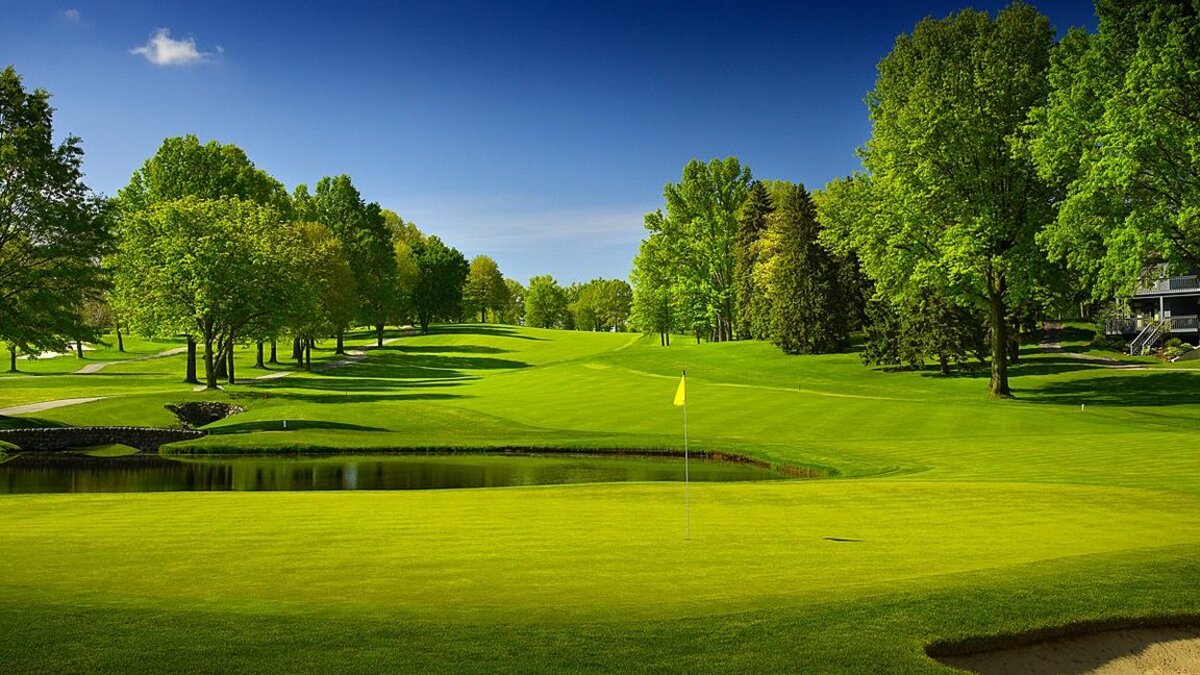
Photo: GolfPass.
Akron, Ohio
There are difficult golf holes, and then there is Firestone’s 16th.
Robert Trent Jones toughened the South Course before the 1960 PGA Championship, stretching the par 5 to 625 yards and adding a pond in front of the green.
Arnold Palmer arrived at No. 16 during the championship and made triple-bogey 8, effectively ending his chances.
His assessment of the hole eventually gave it a nickname:
“The Monster.”
Years later, when Palmer was asked what he remembered about that 1960 experience, his answer was simple:
“I remember all eight shots.”
The name stuck.
Why it matters: Plenty of holes acquire nicknames from architects or marketing departments. This one earned its name by beating Arnold Palmer.
6. Oakland Hills South — Ben Hogan Brings “The Monster” to Its Knees
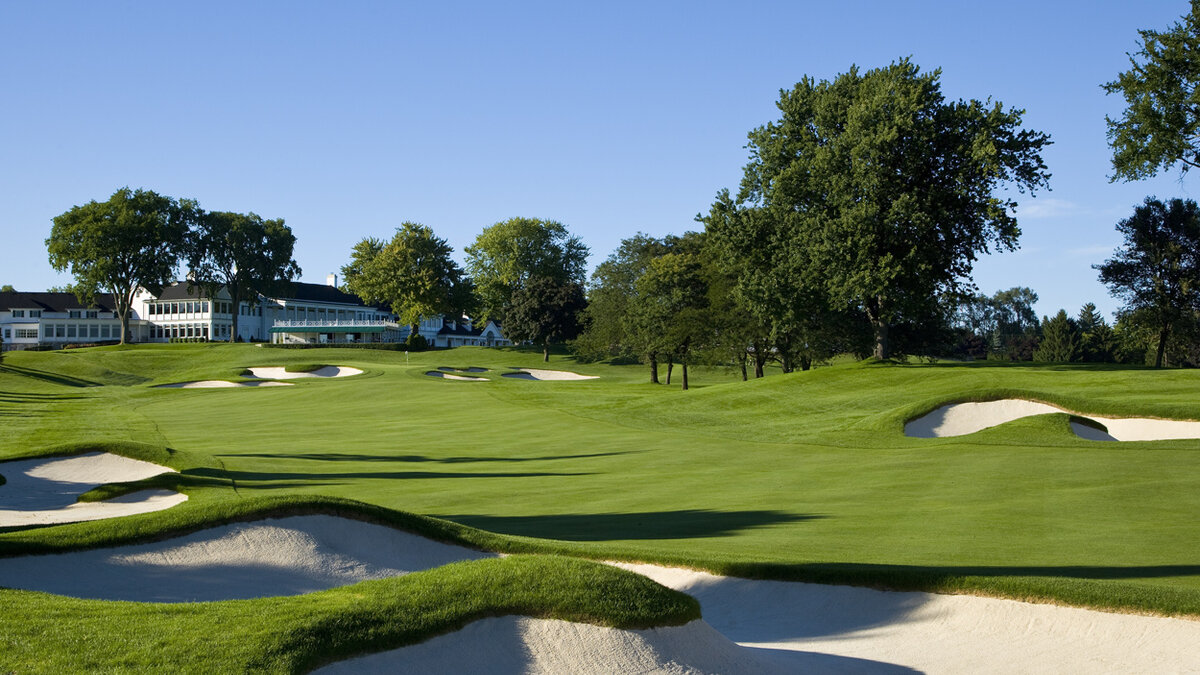
Photo: OmidGol, CC BY-SA 4.0, via Wikimedia Commons. General course view.
Bloomfield Hills, Michigan
Just over the state line from Northwest Ohio sits another Donald Ross course with enormous championship history.
Before the 1951 U.S. Open, Robert Trent Jones Sr. substantially toughened Oakland Hills’ South Course.
Players hated what it did to their scorecards.
Ben Hogan won with a four-round total of 7-over par, then delivered one of golf’s enduring descriptions of a difficult course:
“I’m glad I brought this course—this monster—to its knees.”
From then on, Oakland Hills was “The Monster.”
The course has since hosted additional U.S. Opens, PGA Championships and a Ryder Cup, with more major championships already scheduled.
Why it matters: Firestone has a Monster hole. Oakland Hills became the Monster course.
7. Crooked Stick No. 18 — John Daly Comes Out of Nowhere
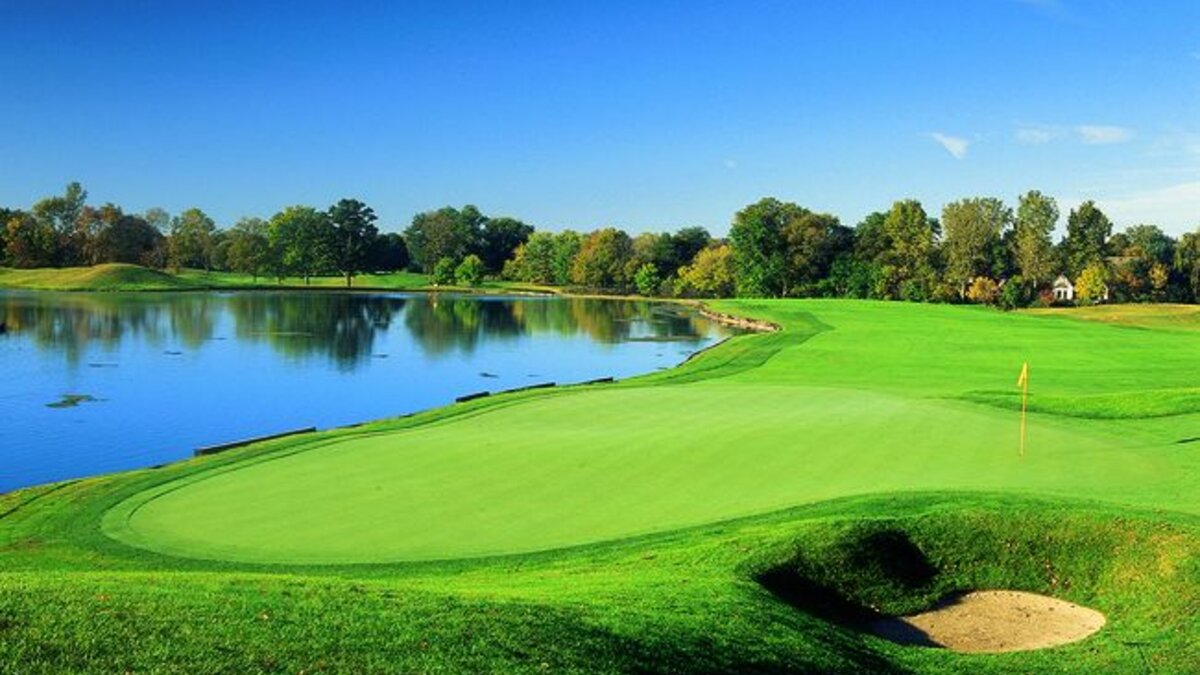
Photo: GolfPass.
Carmel, Indiana
John Daly wasn’t supposed to be the story of the 1991 PGA Championship.
He wasn’t even supposed to be in the field.
Daly arrived at Crooked Stick as the ninth alternate, famously making a hurried trip to Indiana after getting the call.
Four days later, the previously little-known 26-year-old was walking up the 18th fairway pumping up the crowd on his way to becoming a major champion.
The combination of his enormous drives, fearless swing and unlikely path into the tournament immediately made Daly one of golf’s biggest stars.
Why it matters: Sometimes the famous moment isn’t a single shot. It’s the walk toward the final green when everyone realizes a new star has just arrived.
8. Medinah No. 17 — The Putt That Helped Fuel the “Miracle at Medinah”
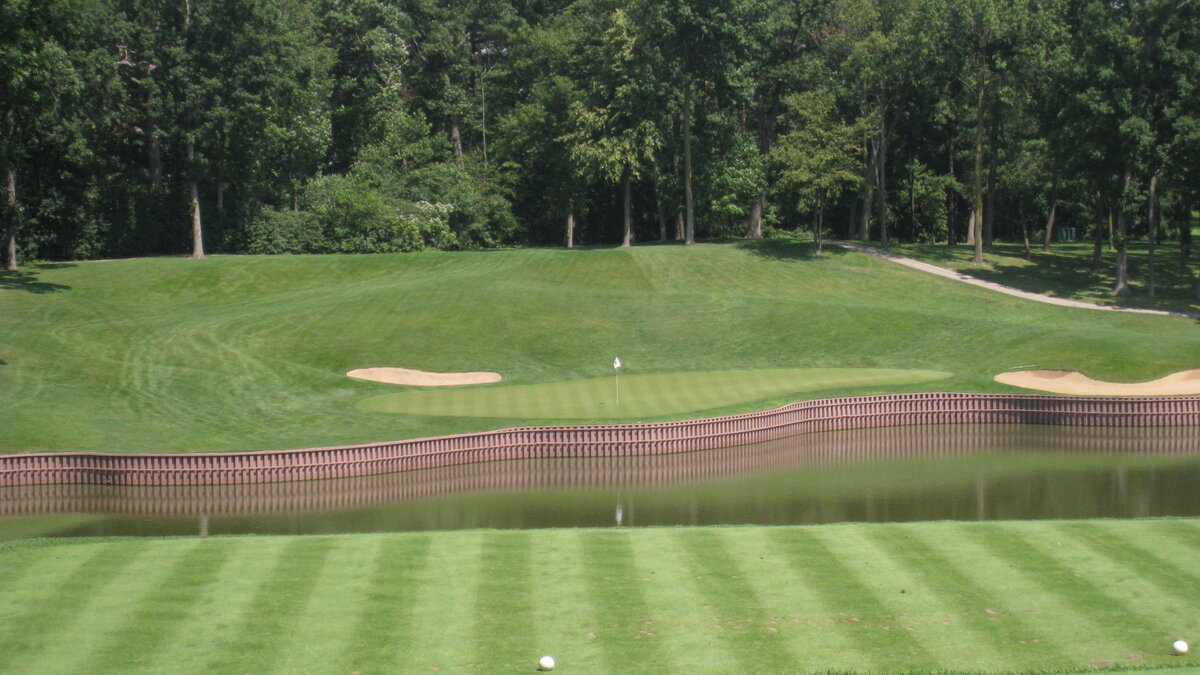
Photo: TW-RF, CC BY 2.0, via Wikimedia Commons. A par-3 17th at Medinah Country Club; the specific course (No. 1, 2, or 3) isn’t confirmed.
Medinah, Illinois
Europe entered the final day of the 2012 Ryder Cup trailing the United States 10–6.
What followed became known as the Miracle at Medinah.
One of the pivotal matches was Justin Rose against Phil Mickelson.
Late in their singles match, Rose rolled in a huge birdie putt on the 17th green. Mickelson famously applauded the shot. Rose then birdied 18 as well to win the match, adding another critical point to Europe’s comeback.
Europe ultimately won 14½–13½, completing one of the greatest rallies in Ryder Cup history.
Why it matters: In match play, one putt can change the mood of an entire team.
9. Whistling Straits No. 18 — “What Bunker?”
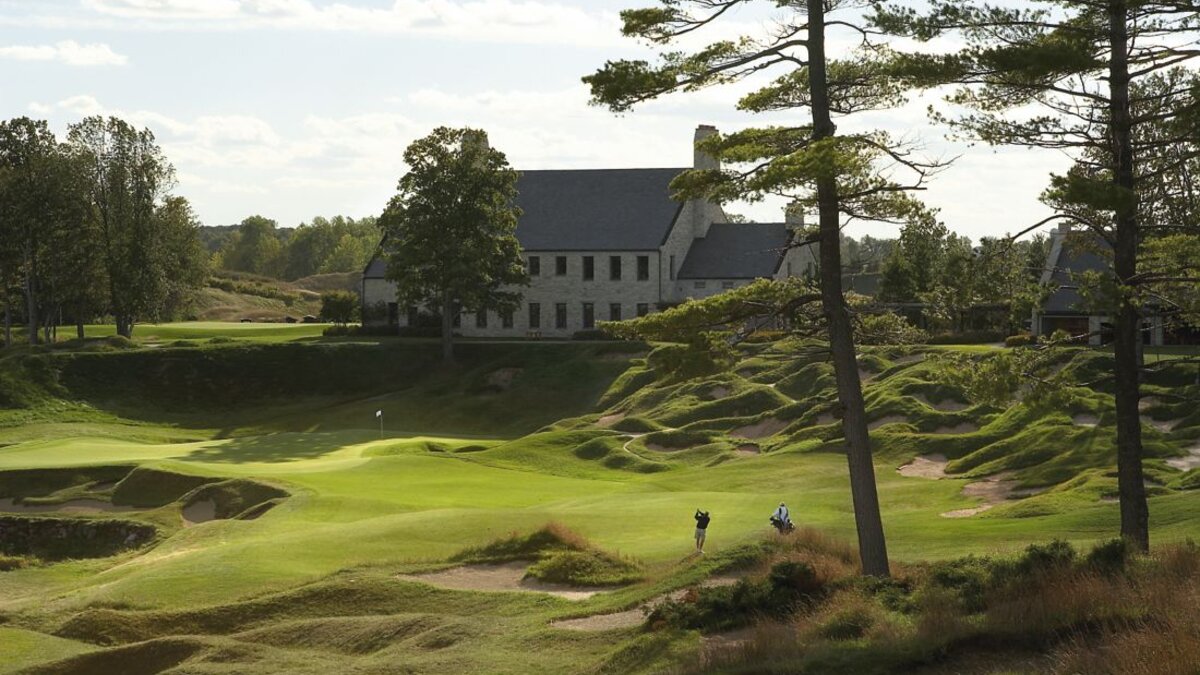
Photo: Kohler Wisconsin.
Kohler, Wisconsin
Dustin Johnson arrived at the 72nd hole of the 2010 PGA Championship with a chance to win his first major.
His drive went far right into an area trampled by spectators. Johnson believed his ball was simply lying on sandy ground.
He grounded his club before hitting.
There was one problem.
It was officially a bunker.
Whistling Straits famously contained hundreds of sandy hazards, including areas spectators routinely stood in. Officials assessed Johnson a two-stroke penalty, knocking him out of the playoff.
His reaction summed up the entire bizarre situation:
“What bunker?”
Martin Kaymer eventually defeated Bubba Watson in the playoff.
Why it matters: It remains one of golf’s great examples of why knowing the rules can matter just as much as hitting the shot.
10. Valhalla No. 16 — Tiger Walks It In
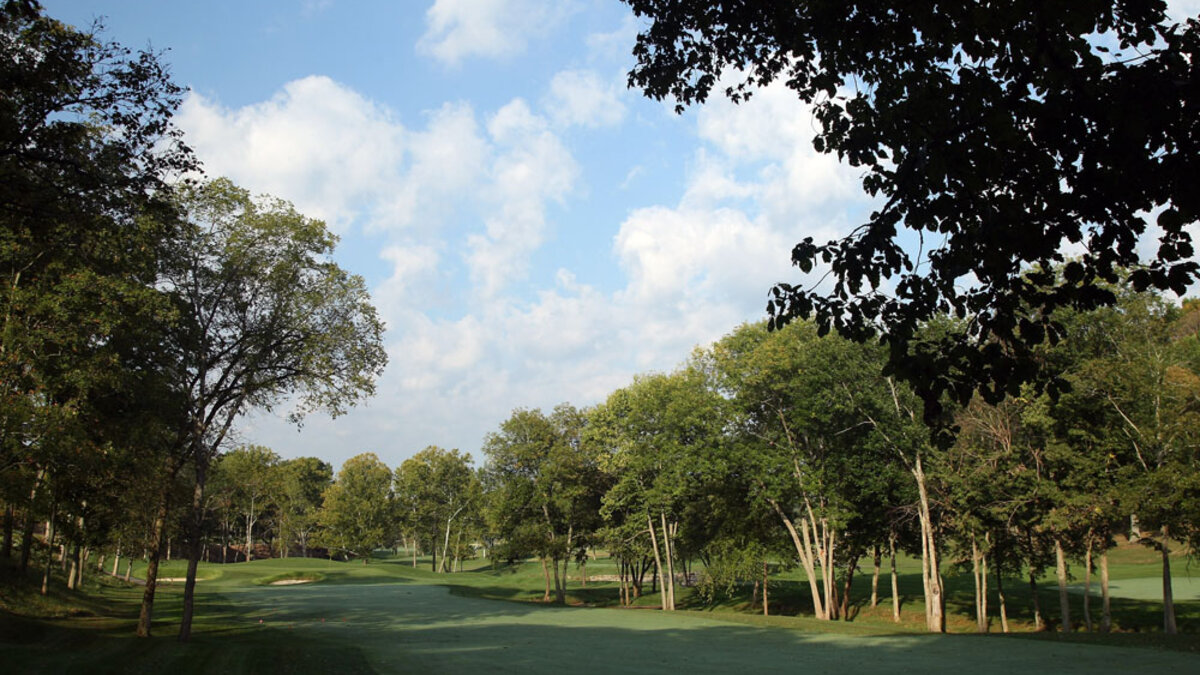
Photo: Golf Monthly.
Louisville, Kentucky
The 2000 PGA Championship produced one of Tiger Woods’ greatest duels.
Tiger and Bob May finished 72 holes tied at 18-under and headed into a three-hole aggregate playoff.
The first playoff hole was Valhalla’s par-4 16th.
Tiger faced a curling birdie putt of roughly 20 feet.
As the ball approached the cup, Woods began walking after it, pointing toward the hole before it had even fallen.
In it went.
That birdie provided the difference in the playoff, and Woods eventually secured his third consecutive major championship.
Why it matters: The finger point and walk toward the cup became one of the defining images of peak Tiger Woods.
Golf History Is Closer Than You Think
Pebble Beach and St Andrews may get more postcards, but golfers around Ohio don’t have to look very far to find some of the game’s greatest stories.
Within the region, you’ll find:
- a championship-winning bunker shot at Inverness
- decades of LPGA golf at Highland Meadows
- Tiger Woods magic at Muirfield Village
- Arnold Palmer battling The Monster at Firestone
- Jack Nicklaus’ home course at Scioto
- and an extraordinary collection of major and Ryder Cup venues scattered across the Midwest
For golfers around Toledo and Rossford, much of American golf history is practically in the neighborhood.
And the next time you’re standing over a difficult bunker shot, a delicate chip or a must-make putt, you can at least be thankful that Greg Norman, Tiger Woods and Arnold Palmer aren’t waiting on the other side of it.
Bring the Competition Indoors
Great golf stories usually start with somebody deciding to take the shot.
At Pin Seeker Golf – Glass City, grab a group, settle the arguments on the course, and see who produces the shot everyone is still talking about after the round.
RECENT ARTICLES
- Famous Golf Holes of Ohio & the Midwest: 10 Stories Every Golfer Should Know CURRENT
- GOLFZON TwoVisionNX
- Part 1: 10 Famous Golf Holes and the Stories That Made Them Legendary